


The Cambridge Journal of Economics has just published a ‘Special Edition’ entitled Macroeconomics, Distribution and the “Economics of Enough.
We are not able to publish the full edition but it can be found here in this link
The edition can be cited
Suzanne J Konzelmann, Alan Shipman, Geoff Tily, Macroeconomics, distribution and the ‘economics of enough’, Cambridge Journal of Economics, Volume 50, Issue 5, September 2026, Pages 811–829,
The introduction to the special edition by the three editors Sue Konzelmann, Alan Shipman and Geoff Tily can be downloaded as a PDF by the button on the left.
One of the editors, PEF Council member, Geoff Tily , explains the background and how the edition came to fruition, and summarises the papers.
‘Macroeconomics, Distribution and the “Economics of Enough”’, the Progressive Economy Forum and Lord Skidelsky
Geoff Tiley
The latest Cambridge Journal of Economics is a Special Issue on ‘Macroeconomics, Distribution and the “Economics of Enough”. As the introduction by the three editors ,Sue Konzelmann, Alan Shipman and Geoff Tily (see PDF ), explains, the issue originated in a December 2023 conversation at the Progressive Economy Forum.
Originally convened as a group motivated by Keynes’s macroeconomics, some Council members were concerned that the most prominent of contemporaneous progressive initiatives were fixated on aggregate supply at the expense of aggregate demand. Moreover these came in the context of an abrupt increase in interest rates, further restraining demand for economies still reeling from austerity, brexit and the pandemic.
The Special Issue aimed to bring into a macroeconomic framework prominent recent contributions on distribution, including the rentier economy (and extraction), wealth taxes and the emerging idea of a ‘K-shaped economy’.
In doing so questions of aggregate demand were broadened beyond an exclusive focus on immediate monetary and fiscal policy considerations, and aimed also at structural as well as short-run priorities. But with emphasis still on demand this meant confronting constraints arising from the climate emergency – borrowing Victoria’s Chick’s idea of an ‘economics of enough’.
The papers published in the Special Issue are summarised in the editors’ introduction; in very brief:
- Coming from two different starting points – one an overview of Keynes’s commentary from the very beginning and the other rooted in the General Theory – two authors (Marc Morgan and Geoff Tily) find in Keynes a substantive macroeconomics of distribution.
- Four papers are from a country perspective and with diverse methodological approaches: a historical account of the extent to which post-war policy in France (1945–1958) followed Keynes’s theory (Hélène de Largentaye), a discursive view of contemporary UK macroeconomic policy and the interplay with spatial and distributional inequality (Arnab Bhattacharjee , Eliza da Silva Gomes , Larissa da Silva Marioni , Adrian Pabst and Tibor Szendrei) and two econometric/empirical analyses, one on the distributional and sectoral consequences of monetary policies in Nordic countries (Hamid Raza and Jawad Khawaja) and one on the interplay of financialised commodity cycles and political economy in Latin America (Samuele Bibi, Nicole Cerpa Vielma and Pedro Perfeito da Silva).
- Three papers put the economics of enough in front place: the first applying in the present policy context a post-Keynesian understanding of risk and distribution (Nina Eichacker), the next a critique on the basis of moral philosophies that growth strategies exacerbate extreme global inequalities and increase climate risk (Sheila Dow), and lastly a challenge urging the climate crisis must mean moving beyond economics altogether (PEF colleague Danny Dorling).
We suggest contacting authors if you are interested in specific papers. The full index is here.
The introduction also includes an appreciation of Robert Skidelsky, who sadly passed away earlier this year.
He was not only involved in the original PEF discussions, but is also a subject of one contribution. On the latter, Marc Morgan justly takes to task Branco Milanovic for his claim that Keynes was had nothing to say about distributional matters, and he also finds Robert (here) making similar problematic claims.
On the former Robert was keen to get materials into the public domain sooner than the editorial process for a journal would allow, so he stepped aside. True to his word he beat us to it. His valedictory and important Keynes for Our Times was published a month after his death. It is striking to find the book inadvertently answering Marc’s critique. Robert now finds
… two bows [in the General Theory] toward the economic case for redistribution. The first was based on his rejection of the classical argument for thrift … More interesting is his argument that capital ownership by a small class kept the rate of interest usuriously high. Reduction of creditor power, as we shall see, was Keynes’s solution to his class struggle. But it would come about not by expropriating owners of wealth; instead, it would require deliberate state action to lower the cost of borrowing money.(p. 59)
These are distributional conclusions par excellence. The first leading to re-distributional taxation both across the income distribution and from wealth to work. The second means a realignment of power relations, and ultimately an increase in the returns to both industry and labour.
Both conclusions go far beyond ‘Keynesian’ and ‘New Keynesian’ orthodoxies that confine Keynes to backing the state against others who support the market. (As Victoria Chick put it in a 1992 autobiographical essay: “For the profession at large, the ‘Keynesian Revolution’ represents a policy conclusion—a view of pathetic shallowness which the ‘new Keynesians’ perpetuate”.) The editors of the Special Issue celebrate Robert’s increasingly post-Keynesian view of his subject by tracing key remarks from across his main works. They (and maybe up to a point some fellow members of the PEF council?!) are of the view that it is to the more substantial account of Keynes – and correction of misinterpretations in orthodox textbook ‘Keynesianism’ – offered by post-Keynesian economics that we must turn to address the problems confronting the world today.
Beyond Keynesian orthodoxies in theory and policy might be a doctrine that is also better placed to handle the ‘economics of enough’. Indeed Tily reminds us – as previously have some scholars operating more in the environmental field – that Keynes was concerned with employment and the level of output not growth.
But the final word should go to Robert. He closes his book with a forceful appeal once more to the vital importance of his subject, his Keynes for Our Times.
The collapse of belief in the possibility of a good future has contributed to the multiplication of the world’s troubles, economic, geopolitical, spiritual. The question today is as brutal as the one Keynes posed in 1936: Is an apocalypse needed to jolt politicians out of their intellectual ruts, or can a better analysis of our problems restore health to our diseased civilization in conditions of peace and freedom? (p. 158)
picture credit:
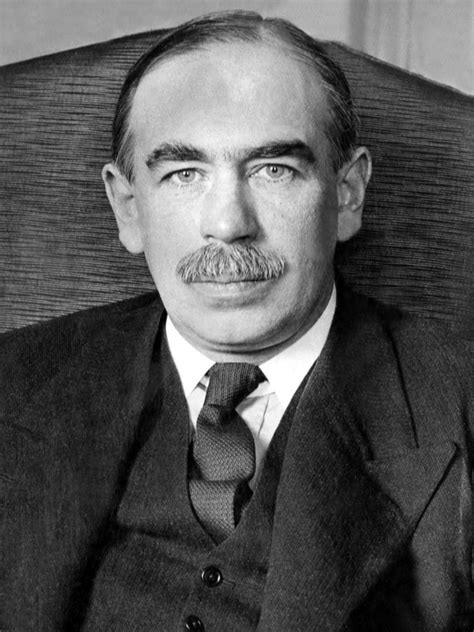
John Maynard Keynes, 1929. Photographer unknown. Public domain, via Wikimedia Commons.